Best Supplements for Muscle Growth
As an Amazon Associate, protein.supply earns from qualifying purchases. We may also earn commission from other affiliate programmes: see our Affiliate Disclosure for full details.
The supplement industry markets dozens of products claiming to accelerate muscle growth. Most have weak or no evidence. Two supplements consistently show meaningful results in research: creatine monohydrate and protein powder. Everything else is secondary or has not been shown to work at meaningful doses.
This guide covers what actually works, what’s marginal, and what’s not worth the money.
Creatine monohydrate and protein powder are the only two supplements with strong, consistent evidence for muscle growth. Buy those first. Pre-workout, beta-alanine, and BCAAs are secondary at best. Most other products are not worth the cost.
- Creatine monohydrate is the most evidence-backed supplement for strength and muscle gains
- Protein powder is not magical: it just makes hitting your daily protein target practical
- Total daily protein matters more than timing: spread 1.6–2.2g/kg across the day
- Pre-workout = mainly caffeine: a black coffee achieves a similar effect for less money
- BCAAs are largely redundant if you're already hitting total daily protein from complete sources
ON Micronized Creatine: The most studied supplement for strength and muscle gain: 3–5g daily. Check current price on Amazon →
ON Gold Standard Whey: Informed Choice certified, 24g protein per serving, consistent quality. Check current price on Amazon →
Transparent Labs Whey Isolate: No artificial sweeteners or additives, 28g protein, Informed Choice certified. Check current price on Amazon →
Tier 1: Supplements With Strong Evidence
Creatine Monohydrate
Creatine is the most researched sports supplement in existence, with over 500 peer-reviewed studies. The evidence is consistent: it increases strength, power output, and lean mass when combined with resistance training.
How it works: Creatine is stored in muscle as phosphocreatine. It replenishes ATP (the energy currency of muscle contraction) faster during high-intensity effort, allowing more reps and heavier loads. Over time, this increased training volume produces greater muscle growth.
What the research shows:
- Meta-analyses consistently show ≈8% increase in strength and ≈14% increase in power output compared to placebo
- Gains in lean mass over training periods of 4–12 weeks: approximately 1–2kg additional lean mass vs. placebo
- Effect is additive with resistance training, not a replacement for it
What to buy: Plain creatine monohydrate powder. There is no evidence that “advanced” forms (Kre-Alkalyn, creatine HCl, buffered creatine) outperform basic monohydrate. They cost significantly more.
Dosing: 3–5g per day, taken at any time. No loading phase is necessary. Takes approximately 4 weeks to saturate muscle stores.
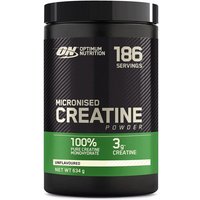
ON Micronized Creatine: Widely tested, trusted brand, unflavored monohydrate. Check current price on Amazon →
Thorne Creatine: NSF Certified for Sport: the independently verified clean option. Check current price on Amazon →
Myprotein Creatine Monohydrate: Best value per gram, Informed Sport certified. Check current price on Amazon →
Protein Powder
Protein powder’s role in muscle growth is simple: it makes hitting daily protein targets practical.
The muscle growth benefit is not from the powder itself: it’s from the protein content. Whether that protein comes from food or powder produces essentially identical muscle protein synthesis when total daily intake is matched.
Who benefits most:
- Active adults needing 140g+ of protein daily who struggle to get it from food alone
- Post-workout scenarios where appetite is low and a solid meal isn’t practical
- High training volume athletes with targets above 180g/day, where food volume becomes unwieldy
What to look for:
- 20–25g+ protein per serving
- Third-party testing (Informed Sport or NSF Certified for Sport)
- Complete amino acid profile (whey is complete; pea + rice blends are also complete)
See our best protein powder guide for a full comparison across all categories.
Dymatize ISO100: Hydrolyzed isolate, 25g protein, Informed Sport certified. Check current price on Amazon →
Tier 2: Supplements With Meaningful but Modest Evidence
Caffeine
Caffeine is well-supported for improving training performance, specifically endurance, power output, and the ability to sustain high-intensity effort. Improved training quality indirectly supports muscle growth over time.
Evidence: Consistent improvements in performance at 3–6mg per kg of bodyweight. Effect size varies by individual: some people are high responders, others less so.
Practical note: Pre-workout supplements are primarily caffeine delivery vehicles. A cup of strong coffee contains 80–150mg caffeine for a fraction of the price of pre-workout powder.
Beta-Alanine
Beta-alanine increases muscle carnosine levels, which buffers lactic acid during high-rep training. The effect is real but modest: most relevant for training sets in the 8–15 rep range.
Evidence: Meta-analyses show improved performance in exercises lasting 1–4 minutes. Less relevant for pure strength training (lower reps, longer rest).
Note: Causes a harmless tingling sensation (paresthesia) in most people. This is a known pharmacological effect, not an adverse reaction.
Vitamin D
Vitamin D deficiency is common, particularly in northern climates and for people who spend most of their time indoors. Deficiency is associated with reduced muscle function and strength.
For muscle growth specifically: Supplementing to correct a deficiency is worthwhile. Supplementing when already sufficient has not been shown to produce additional muscle gains.
Get a blood test first. If you’re in the normal range (50–125 nmol/L), vitamin D supplementation is unlikely to improve muscle growth.
Tier 3: Limited Evidence or Not Worth the Cost
BCAAs (Branched-Chain Amino Acids)
BCAAs are leucine, isoleucine, and valine: the branched-chain amino acids that directly stimulate muscle protein synthesis. The marketing is compelling.
The problem: If you’re already consuming adequate total protein from complete sources (whey, meat, pea/rice blend), you’re getting plenty of BCAAs. Supplementing on top of an already adequate protein intake does not produce additional muscle growth in research.
BCAAs have a niche use case: supplementing during training in a fasted state, or to add leucine when relying heavily on lower-quality protein sources. For most people hitting 1.6g+/kg from complete protein sources, BCAA supplements are redundant.
HMB (Beta-Hydroxy Beta-Methylbutyrate)
A metabolite of leucine, marketed heavily for its anti-catabolic properties. The initial study results were promising; subsequent larger, more rigorous trials have been much less impressive.
Current consensus: Not worth the premium cost for most people. The effect in well-trained individuals with adequate protein intake is minimal.
Glutamine
One of the most popular supplements in the 1990s. Consistently failed to show additional muscle growth in people already consuming adequate dietary protein. The body synthesises glutamine efficiently from food protein. Not worth buying as a standalone supplement.
Testosterone Boosters
No legal over-the-counter supplement has been shown to produce testosterone increases large enough to affect muscle growth in healthy adults with normal testosterone levels. The mechanisms they claim (ashwagandha, D-aspartic acid, etc.) have failed to demonstrate consistent, meaningful hormonal changes in controlled research.
Building a Simple, Evidence-Based Stack
For most people doing resistance training 3–5 days per week, the optimal supplement approach is straightforward:
The essentials:
- Daily protein target: 1.6–2.2g per kg bodyweight from food and/or powder
- Creatine monohydrate: 3–5g daily, any timing, basic unflavored powder
Optional additions: 3. Caffeine pre-training: 100–200mg (≈1–2 coffees) if it improves your training quality 4. Vitamin D: if blood test confirms deficiency (common in winter months)
What to skip: BCAAs, HMB, glutamine, testosterone boosters, most proprietary blends.
Total monthly cost for the essentials: A bag of creatine monohydrate (£10–20 for a 3-month supply) and a quality protein powder (£30–60/month depending on brand and quantity). Everything else is optional.
Protein Powder Options for Muscle Growth
Any complete protein source works. The priorities are hitting daily targets and choosing third-party tested products.
For most people: whey concentrate or blend:
- Optimum Nutrition Gold Standard: 24g protein, Informed Choice certified, consistent quality across years of independent testing. Amazon →
For lactose sensitivity: whey isolate:
- Dymatize ISO100: 25g hydrolyzed isolate, Informed Sport certified, minimal lactose. Amazon →
- Transparent Labs Whey Isolate: 28g protein, no artificial additives, Informed Choice + Informed Protein certified. Amazon →
For plant-based:
- Transparent Labs Plant Protein: pea + rice blend, complete amino acid profile, no artificial sweeteners. Amazon →
See our full best protein powder for muscle gain comparison for more options.
FAQ
What is the most effective supplement for muscle growth?
Creatine monohydrate has the strongest evidence for muscle growth and strength gains. Protein powder is the second most important: it makes hitting your daily protein target practical. Together they form the foundation of any evidence-based supplement stack. Everything else has significantly weaker evidence.
Do I need supplements to build muscle?
No. Adequate training stimulus, sufficient total protein from any source (food or supplement), and adequate sleep are the three non-negotiables. Creatine adds a meaningful but modest benefit on top. Everything else is marginal. Supplements that claim dramatic muscle growth are consistently unsupported by research.
How much protein do I need to build muscle?
Current research supports 1.6–2.2g of protein per kg of bodyweight daily for muscle gain. Higher intakes (up to 3.1g/kg) show no additional benefit but no harm either. Spreading intake across 3–4 meals of 30–40g each maximises muscle protein synthesis compared to consuming the same total in one or two large servings.
Is pre-workout worth taking for muscle growth?
Pre-workout supplements primarily improve performance and training intensity, not muscle growth directly. The main active ingredient in most pre-workouts is caffeine, which is well-supported for performance. If caffeine helps you train harder and heavier, it indirectly supports muscle growth. The other ingredients (beta-alanine, citrulline, etc.) have modest supporting evidence. Pre-workout is not essential: a coffee achieves a similar caffeine effect for much less money.
Related Resources
- Compare protein powders in our best protein powder for muscle gain guide
- Read the whey protein guide for concentrate vs. isolate explained
- Explore high protein foods for whole food sources
- Learn about safety testing certifications: what Informed Sport and NSF actually verify
Last reviewed: by the protein.supply editorial team.